



Home » Residential roofing » Gutters
Gutter Installation, Repair & Gutter Guards in Atlanta, GA
Gutter Installation & Repair
Gutter Guards
Made by a Local Metal Shop
GAF Certified™ Roofer
BBB A+ Accredited
Licensed & Insured
5.0 stars from 19 Google reviews
Why Gutters Matter for Atlanta Homes
- Your foundation, by carrying water away from the house instead of letting it soak in along the walls
- Your basement or crawl space, which can take on water when the ground beside the house stays wet
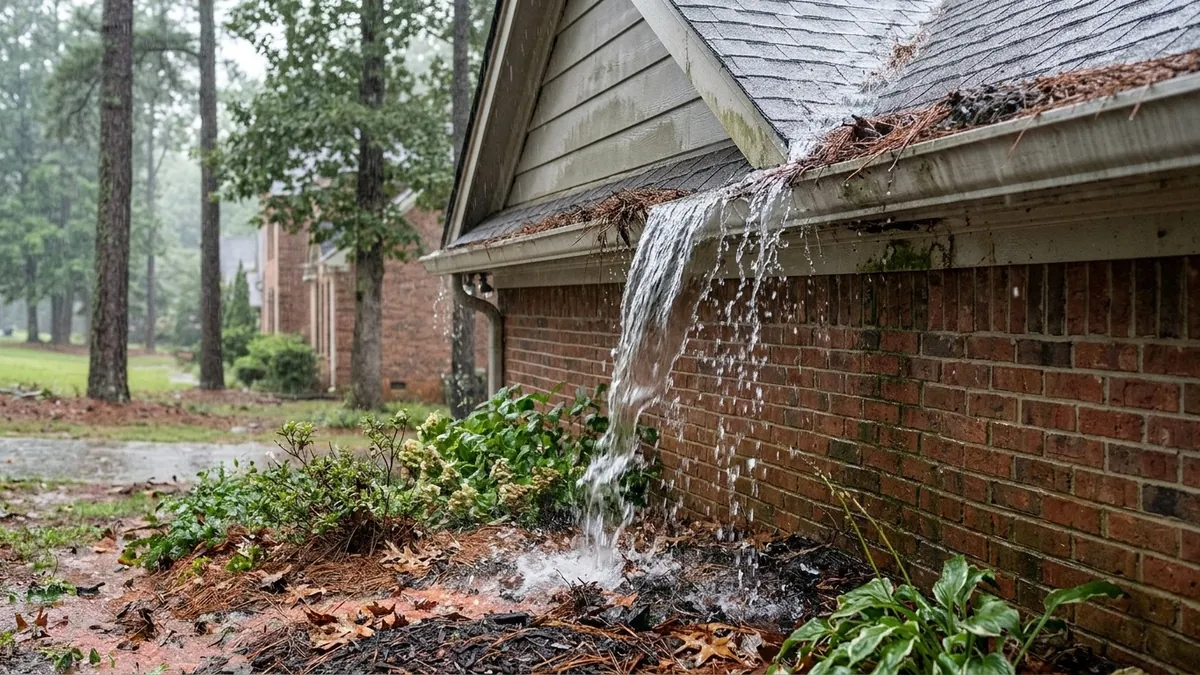
- Your fascia and soffits, the boards along the roof edge that rot when water spills over or sits behind the gutter
- Your landscaping, since Georgia's red clay washes out fast under a waterfall from the roof
- Your siding, windows and doors, which stay drier when water is caught at the roof edge
Gutter Installation in Atlanta

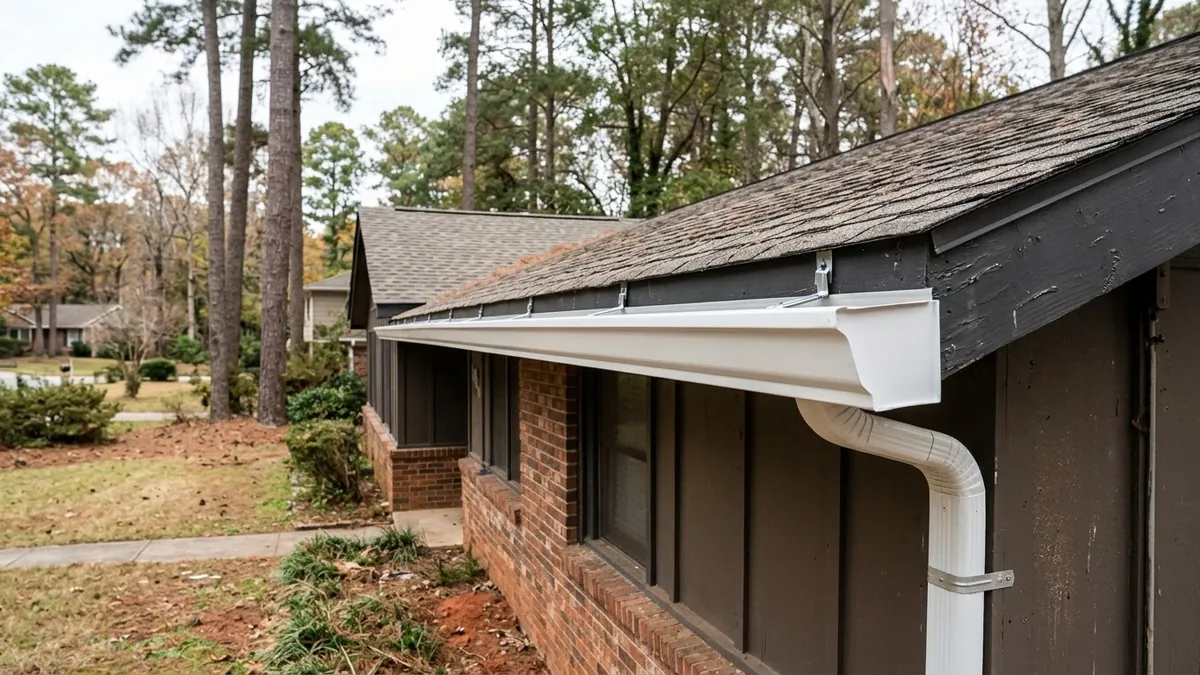
Seamless Gutters
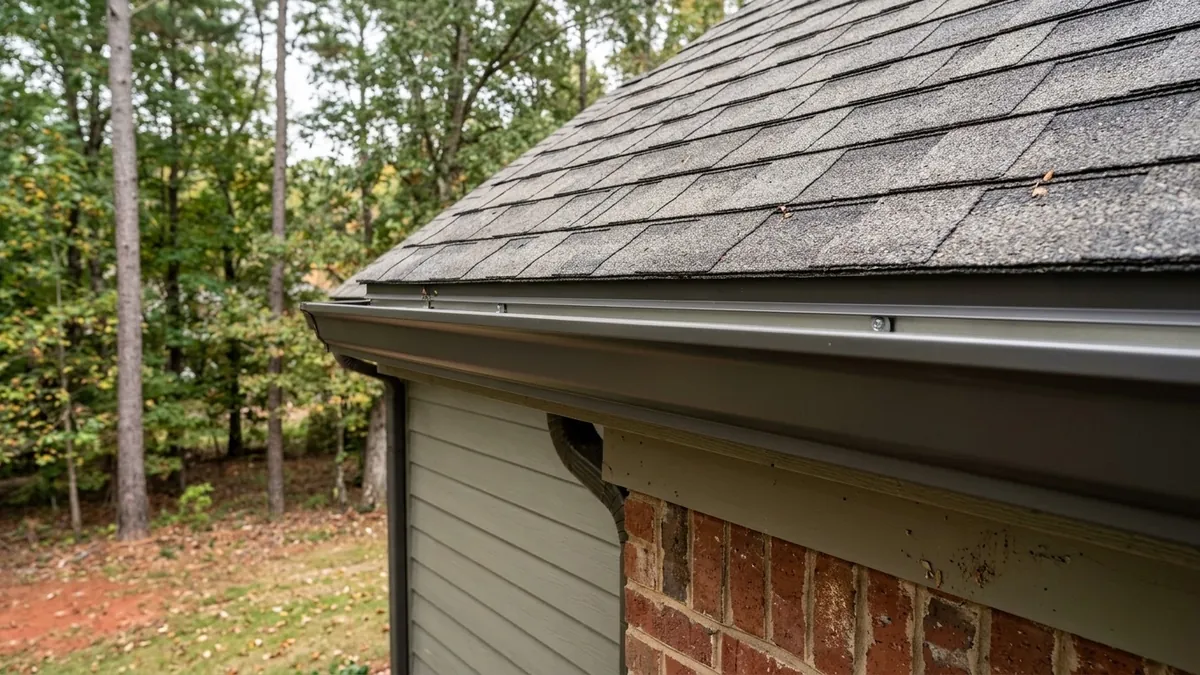
Seamless gutters run in one piece along each side of the house, so the only joints are at the corners and downspouts. Fewer joints means fewer leaks. Sectional gutters come in short lengths joined every 10 feet or so, and every joint is a spot where sealant can fail. We recommend seamless gutters for most homes.
The Right Size Gutters and Downspouts
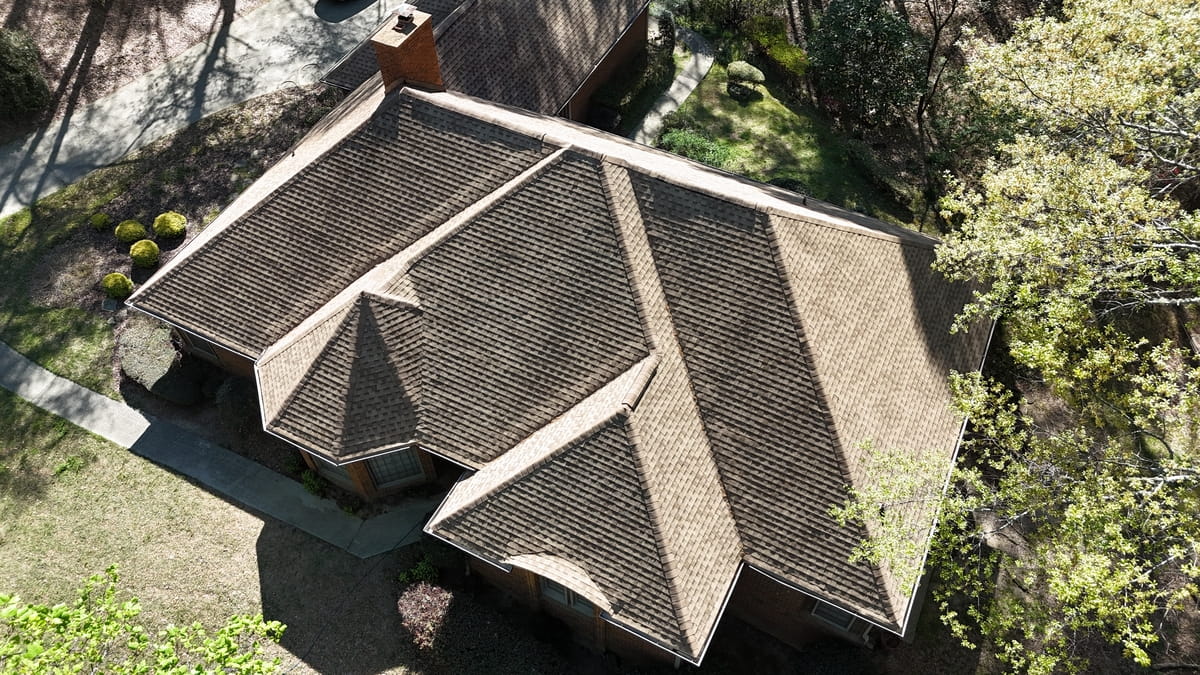
Most homes do well with 5-inch K-style gutters and 2-by-3-inch downspouts. Bigger or steeper roofs, and roofs where several slopes drain into one gutter, often need 6-inch gutters and 3-by-4-inch downspouts to keep up with heavy Atlanta storms. We size the system from your roof area and pitch, not from a one-size-fits-all chart.
Downspouts and Drainage
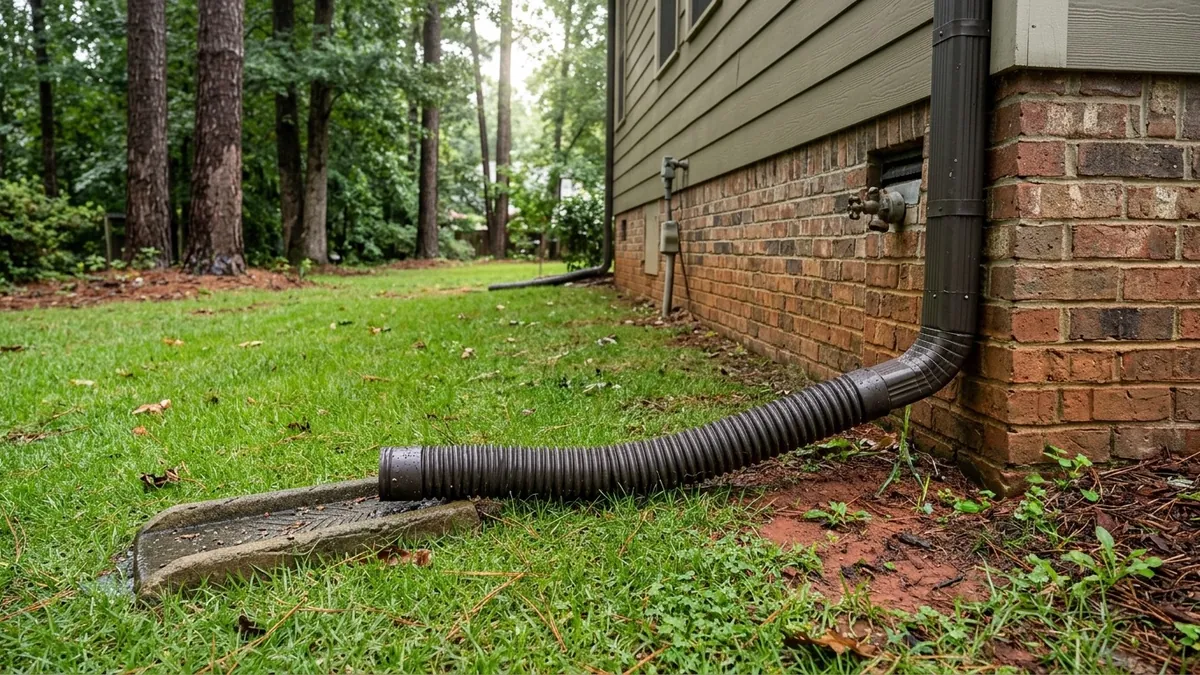
Downspouts need to be in the right places and need to send water away from the house. We place downspouts where they'll drain the gutter evenly, and add extensions or splash blocks so the water lands away from your foundation.
Gutter Replacement: Signs It's Time
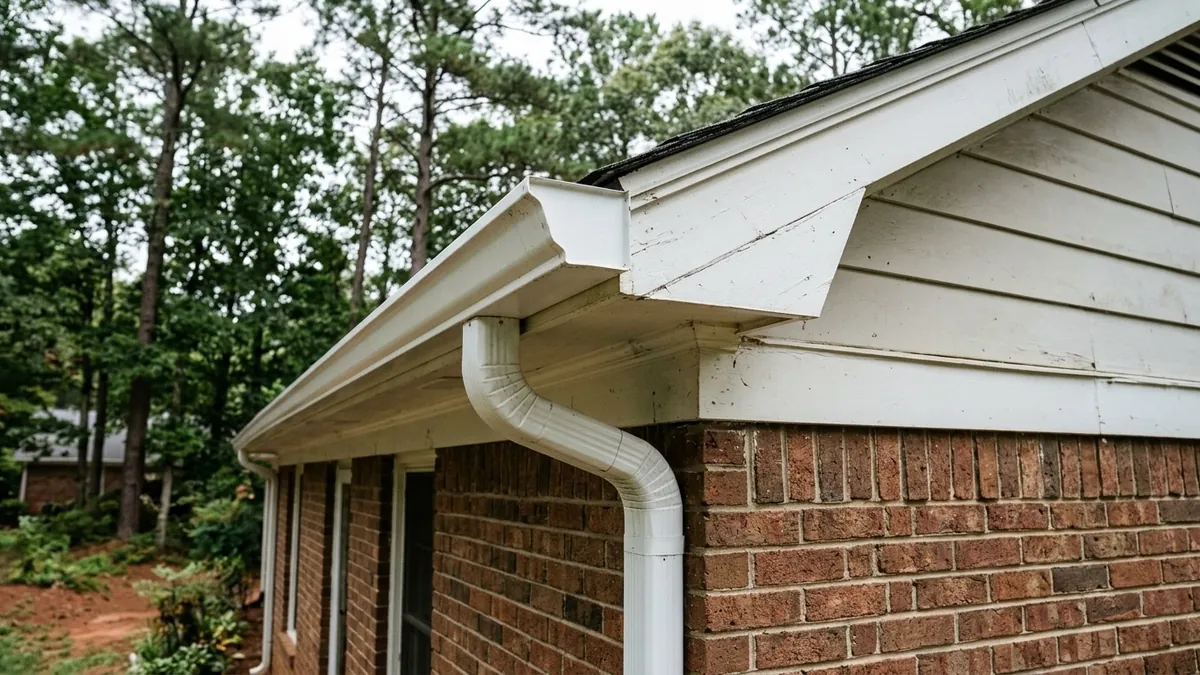
- Sagging or pulling away from the house along long stretches
- Leaking seams and joints that keep failing after they're resealed
- Rust, holes or cracks, especially on older steel gutters
- Water spilling over the front or running behind the gutter
- Peeling paint or stains on the fascia and siding under the gutter
- Water pooling or washed-out soil along the foundation
Gutter Repair in Atlanta
- Resealing leaking seams, corners and end caps
- Re-hanging loose or sagging gutters with new hangers
- Re-pitching gutters that hold standing water
- Reattaching or replacing loose and crushed downspouts
- Replacing short damaged sections after storms or falling branches
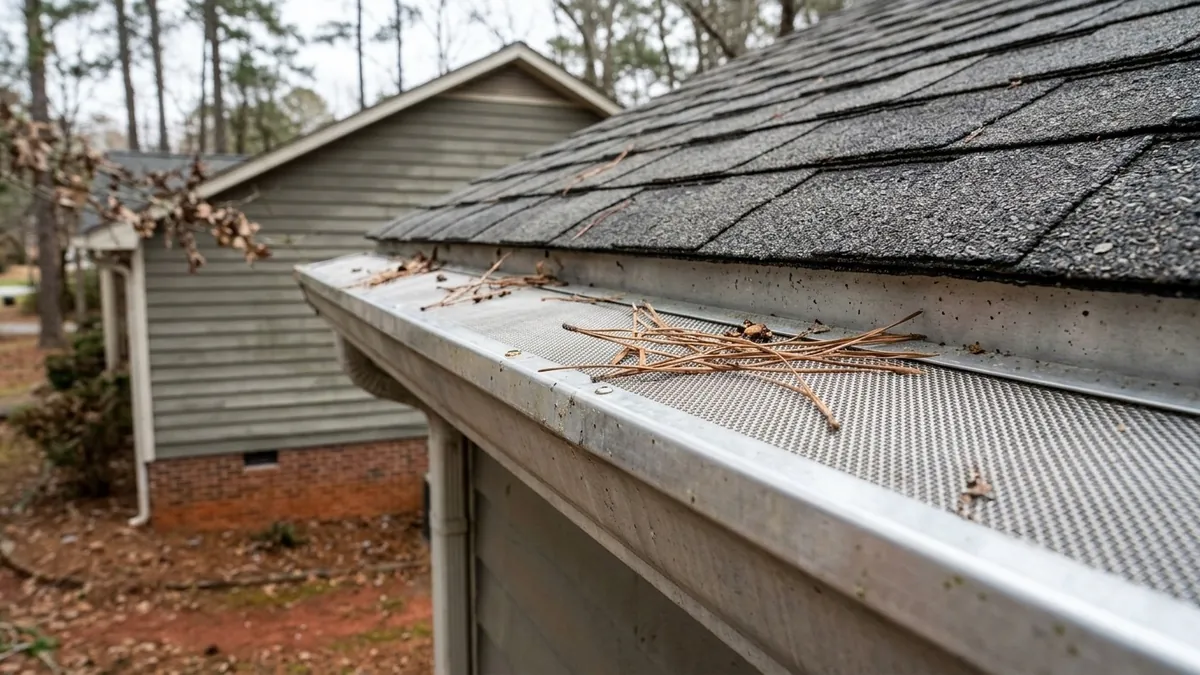
Gutter Guards in Atlanta
| Type | How it works | Good to know |
|---|---|---|
| Screens | A perforated cover over the gutter | Lowest cost; small debris and pine needles can get stuck in the holes |
| Micro-mesh | Fine stainless or aluminum mesh on a frame | Stops pine needles and small debris; the strongest choice for most Atlanta homes |
| Reverse-curve (hood) | Water follows a curved edge into the gutter; leaves slide off | Works well with large leaves; can overshoot in very heavy rain |
| Foam and brush inserts | Fill the gutter so debris sits on top | Easy to install; need cleaning and replacing more often |
Gutters and Your Roof Work Together
The metal strip at the roof edge directs water into the gutter. If it's missing or bent, water runs behind the gutter and rots the fascia.
Gutters come off or get disturbed during a roof replacement, so it's often the best time to replace them too, with one crew and one schedule.
Hail dents gutters and downspouts. Those dents are also a sign the roof may have storm damage, so we check both.
Where the roof meets the gutter, the right flashing keeps water from getting behind it.
How Our Gutter Installation Works
We measure your home, look at the roof edge and fascia, and check where water drains today.
We size the gutters and downspouts and choose downspout locations, and you get a free written estimate.
We remove the old gutters, install the new ones with the right pitch and hangers, and add downspouts and extensions.
We check the flow, clean up the site and haul away the old gutters.
Why Choose Us as Your Gutter Company in Atlanta
A roofing company that does gutters, so the roof edge, drip edge and gutters are done right together
Gutters made by a local metal shop to fit your home
Installation, repair, replacement and gutter guards from one company
20 years of roofing experience and about 1,500 roofs completed
Licensed & Insured: Gwinnett County business license, plus general liability and workers' compensation insurance
Free written estimates, with no pressure to move forward
What Our Customers Say
Gutters Across Atlanta, GA and Gwinnett County
Gutter FAQs
Should I get seamless or sectional gutters?
For most homes, seamless. Sectional gutters are joined every 10 feet or so, and every joint is a place that can leak as the sealant ages. Seamless gutters run in one piece along each side of the house, with joints only at the corners and downspouts, so there’s much less to leak.
Are gutter guards worth it?
For most homes in Metro Atlanta, yes, especially with pine trees or big oaks nearby. Guards keep most leaves and needles out, so gutters clog less often and overflow less in heavy rain. They don’t make gutters maintenance-free: you’ll still want them checked once a year or so.
How long do aluminum gutters last?
Well-installed aluminum gutters often last 20 years or more. Clogs, overflowing water, loose hangers and fallen branches shorten their life, so keeping them clear and firmly attached makes a big difference.
What size gutters does my home need?
Most homes do well with 5-inch gutters. Larger or steeper roofs, and roofs where a lot of water drains into one gutter, often need 6-inch gutters and larger 3-by-4-inch downspouts. We size the gutters and downspouts from your roof area and pitch.
How much does gutter installation cost in Atlanta?
It depends on how many feet of gutter your home needs, the gutter size, the number of downspouts and corners, the height of the roofline, and whether you add gutter guards. We measure your home and give you a free written estimate.
Can you repair my gutters instead of replacing them?
Often, yes. Leaking seams, loose hangers, a sagging run or a detached downspout can usually be repaired. If the gutters are rusted through, badly bent or pulling away along most of the house, replacement is usually the better value, and we’ll tell you which one makes sense.
How often should gutters be cleaned?
At least twice a year for most homes, in late spring and again after the leaves fall. Homes under pine trees or big oaks may need it more often. Gutter guards cut down on how often gutters need cleaning.
Should I replace my gutters when I replace my roof?
It’s often a good time to. The gutters come off or get disturbed during a roof replacement anyway, and new gutters can be fitted to the new drip edge at the same time. If your gutters are in good shape, we can reuse them and tell you so.